


Anyone interested in voice and singing
in deepening their skeletal awareness in relation to the voice.
On-demand masterclass
Robert Sussuma
Explore how skeletal awareness can unlock greater vocal ease, resonance, and expression
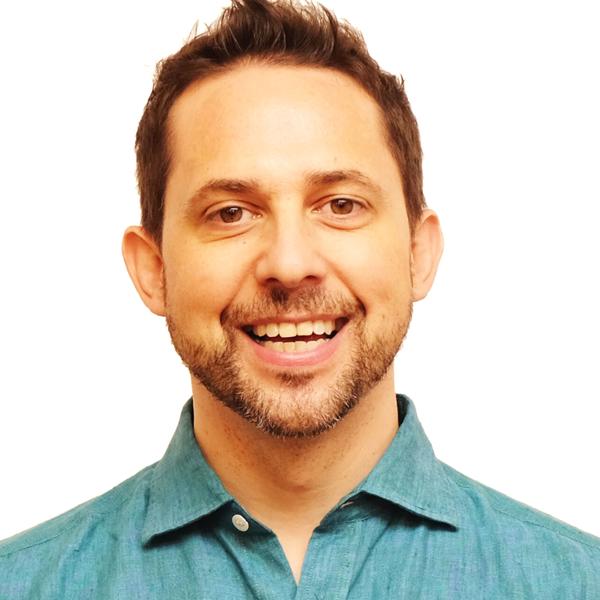
Teacher
Learn from Robert Sussuma (MMus., GCFP), a highly accomplished vocal performance expert and Guild Certified Feldenkrais® Practitioner. He holds two degrees in vocal performance and has taught at esteemed institutions, including Naropa University, PACE University, Harvard University, and the University of Michigan. As a countertenor, Robert has performed professionally in Early Music and Choral Music across the U.S. and internationally.
For voice teachers and vocal coaches, Robert has pioneered a method to “teach without teaching,” fostering discovery and self-learning. He has also created two innovative online programs: The Singing Self Program and The Teacher Track, both available on his website.
in deepening their skeletal awareness in relation to the voice.
who wish to delve deeper into a Feldenkrais® approach to vocal learning & voice development
curious about solving the vocal “problems” that most are trying to solve - but in a different way... from the point of view of the bones
Shift from fixing your voice to uncovering it through awareness and coordination.
Use your bones—real and imagined—to release tension and enhance articulation.
Explore voice through creative puzzles that open new possibilities without effort.
Connect movement, breath, and sound into one fluid, expressive system
Leave with simple strategies to support your voice in daily life and performance.
You’ll learn how awareness of your skeleton can transform the way you sing—bringing new ease, flexibility, and resonance to your voice. Through the Feldenkrais approach, you’ll discover how your bones can guide expression, refine articulation, and dissolve effort, bridging whole-body movement with precise vocal function.
The course includes a balanced mix of discussion, ATM, demos, group work and some open coaching.
There are no prerequisites other than an interest in voice and singing, some basic vocal abilities and lots of curiosity!
The course was taught in English, with live French translation. We are hoping to translate the course into other languages in the future (if you have a specific language request, feel free to email us)
You may take the course at your own pace. The total length of the course is about 20 hours. The course was taught over 4 days, so if you're efficient you can do it in one week. It's also a great resource to come back to. There's a lot of content covered, so you may want to return several times to revisit what you've learned.
Discover the hyoid bone and explore "homologous" relationships, such as the connection between the feet and the tongue. Learn palpation techniques to locate the hyoid, identifying its role in the "belly of the jaw" and its suspension from the skull.
View the larynx as a "little skeleton" within the big skeleton, understanding the specific rocking motions of the thyroid and cricoid cartilages. Use hand models to visualize how these structures articulate to lengthen or shorten the vocal folds, independent of breath pressure.
A paradigm shift moving away from traditional breath support toward establishing the pharynx and C1 (Atlas) as the "vocal fulcrum" or center of gravity. Explore the "Jota" (or Khet) sound to identify the friction point where the "nose meets the mouth meets the throat," separating laryngeal action from aerodynamic force.
Learn to shape the vocal tract by imagining it filled with a viscous "gel," treating the empty space as an "invisible bone" that organizes the tissue around it. Practice proper oral resting posture (tongue on the roof of the mouth) and specific phonemes like "Gung" to integrate the tongue and hyoid movements.
Bridge detailed anatomical focus with whole-body awareness (Telescopic Globality) by applying these concepts to song (e.g., "Norwegian Wood"). Learn to embrace confusion as a learning state, accepting a "no problem, nothing to fix" mindset to allow organic vocal improvement.
Strategies for safely exploring animalistic sounds to access deep resonance without pain. Instructions for self-palpation of the jaw, larynx, and even the C1 vertebra to clarify internal maps.